


Parker Hydraulic Pump Dealer and Supplier in Andhra Pradesh

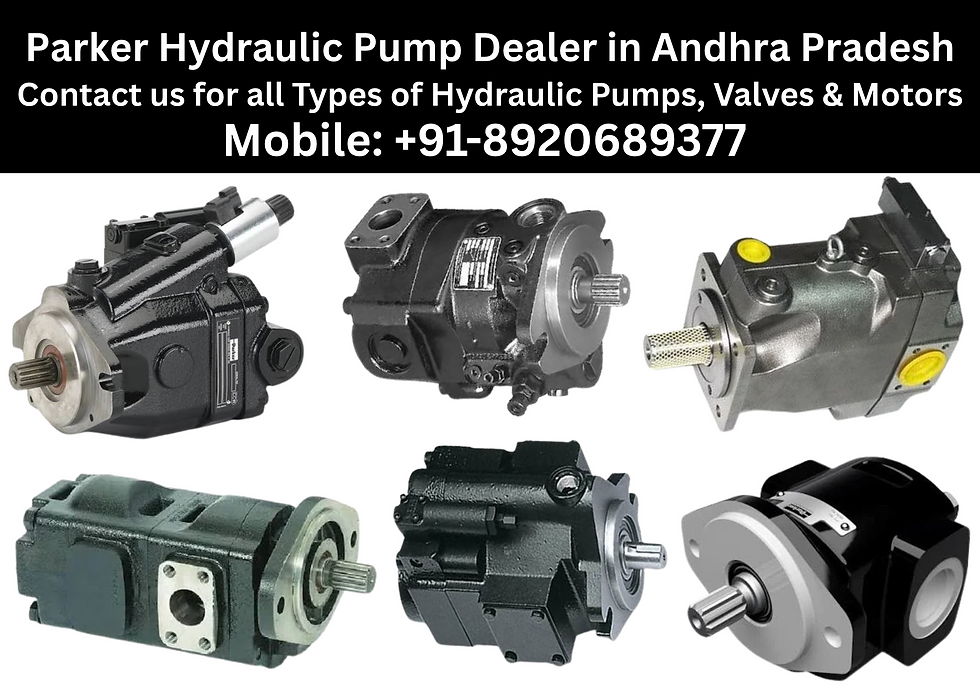
Andhra Pradesh has a diverse industrial economy supported by port operations, manufacturing, agricultural processing, construction, mining, power generation and material handling. Many of these industries depend on hydraulic systems to operate lifting equipment, production machinery, mobile machines and industrial power units. Hydraulic pumps generate fluid flow, motors convert hydraulic energy into rotation, and valves regulate pressure and movement.
Multitech India assists businesses searching for a Parker hydraulic pump dealer and Supplier in Andhra Pradesh with hydraulic component enquiries, pump model identification and replacement requirements. Customers can provide their original part number, machine model and technical specifications to help identify a suitable Parker product family.
Parker's hydraulic portfolio includes axial piston pumps, bent-axis pumps, gear pumps, vane pumps and specialised hydrostatic transmission products. Each series has its own operating limits, displacement options and installation requirements. Selecting the correct component requires checking the hydraulic circuit, pressure rating, flow, rotational speed, shaft design, mounting arrangement and control configuration.
Parker Hydraulic Pump Dealer and Supplier in Andhra Pradesh for Industrial Machinery
Hydraulic pumps are used in machinery requiring controlled force, lifting, pressing, clamping and rotational power. The appropriate pump depends on the equipment's original hydraulic design and its operating conditions. Selecting a component based only on appearance or a broad product description can result in compatibility problems.
Industrial operations in Visakhapatnam and Vijayawada may require hydraulic components for manufacturing equipment, port-related machinery, industrial maintenance and material handling. Multitech India assists buyers by reviewing available model codes, machine information and technical documentation.
Before ordering a replacement, verify the complete pump designation, displacement, pressure capability, rotation direction, shaft configuration, mounting dimensions and port arrangement. Variable-displacement pumps also require verification of their control configuration and operating requirements.
Accurate identification helps buyers reduce procurement errors and determine whether the required component is a direct replacement or needs further technical assessment.
Parker Axial Piston Hydraulic Pump Models in Andhra Pradesh
Parker axial piston pumps serve compatible industrial and mobile hydraulic applications requiring specific pressure, flow and control characteristics. The correct family depends on the machine design, required displacement and hydraulic circuit.
Major Parker axial piston pump series and selected model identifiers include:
PVplus Series 1
PVplus Series 2
PVplus Series 3
PVplus Series 4
PVplus Series 5
PVplus Series 6
PV016
PV020
PV023
PV028
PV032
PV040
PV046
PV063
PV076
PV080
PV092
PV100
PV140
PV180
PV270
PV360
PD Series
PVP Series
P1 Series
P1M Series
PAVC Series
P2 Series
P3 Series
PVH Series
VP1 Series
C Series
PC3 Series
These identifiers cover major product families and selected model sizes, not every Parker ordering code. Individual configurations may differ in displacement, pressure rating, mounting arrangement, shaft design and control options.
Businesses operating in Guntur and Kakinada should provide the original pump code and equipment details to help establish the appropriate product family. The replacement must be verified against the relevant technical specifications before procurement.
Parker Bent-Axis Hydraulic Pump Models and Series
Bent-axis piston pumps are used in selected mobile and industrial hydraulic applications. Their suitability depends on displacement, rotational speed, operating pressure, shaft configuration and the machine's hydraulic circuit.
Major Parker bent-axis and related pump series include:
F1 Series
F2 Series
F3 Series
F4 Series
F10 Series
F11 Series
F12 Series
T1 Series
These series have different configurations and operating characteristics. The complete model designation should be checked before selecting a replacement. Buyers should also confirm whether the original component is a pump, motor or a product designed for a particular combined application.
Industrial equipment users in Tirupati and Nellore can provide the original part number, machine model and hydraulic schematic to support product identification. Pressure capability, rotation direction, mounting dimensions and port configuration should be checked before confirming compatibility.
Parker Gold Cup Hydrostatic Transmission Pump Series
Parker Gold Cup products are designed for suitable hydrostatic transmission applications. Depending on the configuration, these systems may operate in open- or closed-circuit arrangements and require components matched to the original transmission design.
The principal product family is:
Gold Cup Series
The exact unit designation, displacement, control arrangement, pressure limits and circuit configuration must be confirmed before ordering. Buyers should establish whether the requirement involves a complete transmission unit, an individual pump or another hydraulic component.
For equipment operating in Rajahmundry and Kurnool, the original technical documentation can help determine the required transmission configuration. A conventional industrial pump should not automatically be considered a substitute for a specialised hydrostatic transmission component.
Parker Gear Hydraulic Pump Models: PGP, GPA and GP1 Series
Parker gear pumps are used in compatible fixed-displacement hydraulic circuits. Different models have different displacement ranges, pressure capabilities, shaft arrangements and mounting configurations.
Major Parker gear pump series and selected model identifiers include:
PGP020
PGP031
PGP051
PGP075
PGP315
PGP330
PGP350
PGP365
PGP505
PGP511
PGP517
PGP610
PGP620
PGP640
GPA Series
GP1 Series
D Series
H Series
HD Series
The complete model code must be verified to establish the displacement, pressure rating, rotational speed, port arrangement and mounting details. The series name alone does not establish interchangeability.
Businesses in Anantapur and Kadapa may require gear pumps for compatible industrial machinery, auxiliary hydraulic circuits and maintenance replacements. The selected pump should match the original equipment requirements and be checked against the relevant technical documentation.
Parker Vane Hydraulic Pump Models: T6, T67 and T7 Series
Parker vane pumps are designed for hydraulic circuits requiring compatible vane pump characteristics. Different T6 and T7 configurations serve different industrial and mobile applications, depending on the exact model and operating conditions.
Major Parker vane pump series and selected identifiers include:
T6 Series
T6C
T6D
T6E
T6CC
T6DC
T6ED
T67 Series
T67CB
T67DB
T67DBB
T7 Series
T7A
T7AS
T7B
T7D
T7E
T7DD
T7EE
T7EB
T7ED
T6M Series
T6R Series
T6H Series
T7H Series
These identifiers represent selected families and configurations. Exact specifications and current availability must be verified for the required model.
Vane pump selection requires checking displacement, pressure capability, rotational speed, shaft design, port configuration and fluid requirements. Combined pump assemblies require verification of the full arrangement before a component is replaced.
For equipment users in Eluru and Ongole, providing the original pump number, machine information and clear photographs can assist preliminary identification. Final selection should be based on verified technical specifications.
Parker Hydraulic Motor Supplier in Andhra Pradesh
Hydraulic motors convert fluid power into rotational mechanical energy. They are used in compatible conveyors, winches, industrial drives, mobile machinery and other equipment requiring controlled rotation. Motor selection depends on torque, speed, displacement, pressure differential and flow requirements.
Multitech India assists customers with Parker hydraulic motor enquiries by reviewing original model codes and application details. Businesses in Srikakulam and Vizianagaram may require hydraulic motors for compatible industrial equipment, material-handling systems and machinery maintenance.
Before ordering a replacement motor, verify the complete product code, shaft dimensions, mounting flange, port arrangement, displacement and operating limits. Case-drain requirements and hydraulic fluid specifications should also be checked where applicable.
A motor that resembles the original may have different performance characteristics or mounting dimensions. Final compatibility must be confirmed against the equipment manufacturer's documentation.
Parker Hydraulic Valve Dealer in Andhra Pradesh for Flow Control
Hydraulic valves regulate pressure, flow and fluid direction within hydraulic systems. They help coordinate actuator movement and distribute hydraulic power between different machine functions.
Common hydraulic valve categories include:
Directional control valves
Pressure relief valves
Pressure control valves
Flow control valves
Proportional control valves
Cartridge valves
Each category performs a different function. Correct selection requires checking the complete model code, rated flow, pressure rating, port configuration, spool arrangement and actuation method.
For machinery operating in Chittoor and Bapatla, the original valve number and hydraulic schematic can help establish the appropriate replacement category. Electrically operated valves also require verification of coil voltage, connector type and electrical specifications.
Hydraulic Pump Repair, Testing and Replacement Support
Hydraulic pump performance may deteriorate because of internal wear, contaminated oil, cavitation, aeration, excessive temperature, unsuitable fluid viscosity or restricted suction lines. Similar symptoms can also originate from faulty valves, damaged hoses or other components in the hydraulic circuit.
A structured assessment should include:
Recording the original pump model and machine details.
Inspecting accessible connections, hoses and visible leakage.
Checking oil condition, fluid level and filtration.
Measuring pressure, flow and temperature where appropriate.
Identifying whether the fault originates in the pump or another component.
Verifying the proposed replacement against the original specifications.
Following the equipment manufacturer's installation and commissioning procedures.
Repair suitability depends on the component's condition, the nature of the damage and the availability of appropriate service parts. Replacing a pump without resolving the original cause of failure may lead to recurring problems.
Maintenance and testing should be performed by qualified personnel using suitable safety procedures. Hydraulic systems can retain dangerous pressure after machinery stops, so proper isolation and depressurisation are essential before repairs begin.
Parker Hydraulic Components for Andhra Pradesh's Industrial and Port Sectors
Andhra Pradesh's industrial activity includes port operations, manufacturing, agricultural processing, construction and infrastructure development. These sectors require hydraulic equipment for lifting, pressing, rotating, steering and other power-intensive functions.
Equipment users in Visakhapatnam and Kakinada may need hydraulic components for compatible port machinery, industrial systems and material-handling equipment. Product selection should account for operating pressure, flow, duty cycle, fluid requirements and the original hydraulic circuit.
Industrial operations in Vijayawada and Guntur may require pumps, motors and valves for production machinery and equipment maintenance. The appropriate component depends on the machine's technical specifications and intended application.
Providing the original part number, equipment model, photographs and available hydraulic documentation helps establish the relevant product family before procurement.
How to Identify the Correct Parker Hydraulic Pump
Accurate identification is essential when a pump has failed, maintenance records are incomplete or a replacement must be sourced. Different configurations within the same product family may have different pressure ratings, displacement, control arrangements and mounting dimensions.
Before requesting a replacement, prepare the following information:
Original Parker model number or part code.
Machine manufacturer and equipment model.
Required flow rate and operating pressure.
Pump displacement and rotational speed.
Rotation direction from the specified reference point.
Shaft design and mounting dimensions.
Port sizes, positions and connection type.
Fixed- or variable-displacement configuration.
Hydraulic fluid specification and operating temperature.
Description of the fault, where applicable.
If the original nameplate is unreadable, clear photographs of the complete pump, shaft, mounting face and ports may help with preliminary identification. The final model must be verified against the relevant technical documentation and equipment manufacturer's specifications.
A Practical Example of Hydraulic Pump Troubleshooting
Consider a hypothetical industrial facility in Andhra Pradesh where a hydraulic-operated machine begins moving more slowly than usual. The maintenance team suspects pump wear but first records the original model number and reviews the hydraulic schematic.
A qualified technician checks the oil condition, filter and suction line before measuring pressure and flow against the equipment manufacturer's specifications. If a restriction or another circuit fault is identified, that issue must be addressed before deciding whether the pump needs replacement.
If testing confirms that the pump no longer meets the required performance, a suitable repair or replacement can be evaluated. The proposed component must be checked for displacement, pressure capability, rotation direction, shaft arrangement, mounting dimensions and control configuration.
The machine is then commissioned according to the manufacturer's procedure and tested within its specified operating limits. This hypothetical example illustrates the importance of systematic diagnosis and accurate model identification; it is not a claim about a verified customer project.
Why Choose Multitech India for Parker Hydraulic Components?
Businesses searching for a Parker hydraulic pump dealer and Supplier in Andhra Pradesh need accurate product identification and clear technical information. Selecting a pump according to the machine's actual hydraulic requirements helps reduce compatibility issues and unnecessary procurement delays.
Multitech India assists customers with enquiries involving Parker hydraulic pumps, motors, valves and replacement requirements. Buyers can provide the original part number, machine information and available documentation to help establish the relevant product family.
Before confirming an order, verify the complete model code, technical compatibility, current availability, commercial terms and applicable warranty or service conditions. Final selection should be based on the equipment manufacturer's requirements and verified product specifications.
Hydraulic Component Enquiries Across Andhra Pradesh
Multitech India welcomes enquiries from industrial and commercial equipment users throughout Andhra Pradesh, including Visakhapatnam, Vijayawada, Guntur, Kakinada, Tirupati, Nellore, Rajahmundry and other parts of the state.
Customers should provide the original pump, motor or valve designation wherever possible. If the model number is unavailable, machine details, photographs and relevant hydraulic documentation can assist preliminary identification.
The appropriate component depends on the machine's operating conditions and technical requirements, not simply the installation location. Verifying compatibility before procurement supports a more informed purchasing decision.
Frequently Asked Questions
1. Who is the Parker hydraulic pump dealer in Andhra Pradesh?
Multitech India assists buyers with Parker hydraulic pump, motor and valve enquiries in Andhra Pradesh. Provide the original model number and equipment specifications to help identify a suitable component.
2. Which Parker hydraulic pump models are covered in this article?
The listed identifiers include PVplus, PV016, PV020, PV023, PV028, PV032, PV040, PV046, PV063, PV076, PV080, PV092, PV100, PV140, PV180, PV270, PV360, PD, PVP, P1, P1M, PAVC, P2, P3, PVH, VP1, C, PC3, F1, F2, F3, F4, F10, F11, F12, T1, Gold Cup, PGP020, PGP031, PGP051, PGP075, PGP315, PGP330, PGP350, PGP365, PGP505, PGP511, PGP517, PGP610, PGP620, PGP640, GPA, GP1, D, H, HD, T6, T67 and T7 families.
3. Can Multitech India help identify a Parker pump without its model number?
Preliminary identification may be possible using the machine model, photographs, shaft dimensions, mounting details and available hydraulic specifications. Final compatibility requires technical verification.
4. Does Parker manufacture piston, gear and vane hydraulic pumps?
Yes. Parker's hydraulic pump portfolio includes axial piston, bent-axis piston, gear and vane technologies, as well as specialised hydrostatic transmission products.
5. Can a Parker pump from another series replace the original?
A different series should only be considered after verifying displacement, pressure, flow, control configuration, rotation, mounting and hydraulic circuit compatibility.
6. Does Multitech India handle Parker hydraulic motors and valves?
Multitech India supports enquiries involving Parker hydraulic components, including pumps, motors and valves. Provide the original product code and application details to establish the requirements.
Conclusion
Parker's hydraulic pump portfolio includes axial piston, bent-axis, gear and vane pump families, together with specialised hydrostatic transmission solutions. The model identifiers in this article provide a broad starting point for product identification, but the exact ordering code and technical compatibility must be verified before purchase. Multitech India assists businesses searching for a Parker hydraulic pump dealer and Supplier in Andhra Pradesh with component enquiries, model identification and replacement assessment. Accurate equipment information helps establish the required specifications and supports a more informed purchasing decision.


Comments